A web design agency for accessible, high-performance sites
We design accessible, high-performance websites for organisations across the UK, US and Europe, bespoke builds on Craft CMS and design systems, delivered by a fully remote team since 2013.


Goal-focused user research
Challenge assumptions
Creative design solutions
UI/UX best practices
Usability + accessibility
= Happy users


What's wrong with your current site?
Full of AI slop?
AI-generated layouts that could belong to anyone. We start with research into your users, so the design could only be yours.
Looks like a template?
A £49 theme with your logo on it tells buyers you cut corners. We design every site from scratch.
Visitors, but no enquiries?
People who can't see the next step leave. We find where visitors drop off and redesign those pages first.
Can't prove it pays for itself?
We agree measurable goals, like enquiries or sign-ups, before design starts, then track them after launch so you can see the return.
Worried about accessibility rules?
Selling to EU customers? The European Accessibility Act may already apply. We design to WCAG AA from the first wireframe.
Rebranded, but your site hasn't?
A new brand on an old site confuses buyers. We carry it into every page, from type and colour to imagery.
Real results, not just nice ideas

6.1%
Quality Hive saw sign-ups increase by 6.1%—a major win for a SaaS platform.

10.2%%
Pink Moon’s bounce rate dropped by 10.2%, improving engagement and page rankings.
30.7%%
Certitude London’s site speed improved from 2.6s to 1.8s—a major boost in performance.

3x
Global Connections saw time-on-site increase—clear proof of smart UI and UX decisions.

85.2%
IGN’s homepage was reduced from 2.3MB to just 0.34MB—faster load times, better experience.

10.7%
Bounce rate reduced again for Global Connections, strengthening both engagement and SEO.
Our Work









UX Design
Carefully considered and researched user experience design to challenge assumptions and give meaningful results.
User Research
Sack assumptions. Get real insight into your users' behaviours, motivations and needs.
User Personas
Define personality, skill level, goals, needs and motivations into logical user groups.
User Flows
Reimagine the perfect user flow and guide users towards Nirvana. (The place, not the band. RIP Kurt).
Sitemapping
What pages do your user expect? Pairs perfectly with a large glass of Content Audit.
Wireframes
A quick and dirty way to communicate and test ideas without focusing on aesthetics.
Prototypes
Low-fi interactive proof of concept mockups. Like a real website without development overhead.
Competitor Research
With all our heart, we hate them too. But what are they doing well? What do they suck at? What can we "borrow"?
Content Audit
Discover what pages to cull and what to promote. Seen through the eyes of humans and Google.
Enhance and optimise your current or new website to increase its effectiveness and gain valuable insights
UI Design
User interface design using best practices to engage and turn users into paying customers.
Responsive Web Design
Great looking web design across all screens. Except Nokia's.
Illustration, Icons & Photography
Designed and snapped to sit perfectly alongside and enhance your brand.
Copy & content creation
Let us elevate your website with the right stuff. We mite even use a dictionary.
Design Systems
Create organisational alignment and wave goodbye to rogue development choices, choose us for your design system agency.
Art Direction
There's only one direction – and they wrote the best song ever. Literally.
Product Design
It’s digital interfaces that aren’t websites, like SASS products.
Website Accessibility
Fast, simple and inclusive. No matter how you surf the web, dude.
Accessibility Guidelines
Clear documentation to educate and align best practices for all screens.
Accessibility UI Audits
Don't unknowingly exclude users. Make sure your site stacks up.
WCAG 2.1 AA Compliant
Colour contrast, font sizes, heading levels. Small details that really matter.
Website Discovery Workshop
A fail-safe workshop for delivering absolute clarity on your next website.
Rock-solid process. Zero guesswork.
Our web design process
1. Discovery
A deep dive into what we're designing. Speedo's optional.
2. User Research
Who are they? What motivates them? Do they like Marmite?
3. Wireframes + Prototypes
Test ideas quickly with real user feedback.
4. UI Design
Based on actual user research. Not fads or trends.
5. Design Systems
The single source of truth across your organisation.
6. WCAG 2.1 Compliance
Exclude exclusion.
Three small steps for you. One giant leap for your website
Get in touch
Share your problems.
Strategy
Planned and aligned for success.
Delivered
Piping hot. On-time. On budget.
Stuff people say about us
Trusted by 240+ organisations

Why Honcho?
There are 845,657 other agencies out there. So why choose Honcho?
We’re not a full-service agency
Web experts with marketing acumen
We’re remote
We can work with anyone, anywhere
We don't just talk UI/UX
Ready to talk?

Contents

How to choose a web design agency
Hello, I'm Ben, the Creative Director at Honcho 👋. With 20 years of experience in the industry, I want to pull back the curtain on what it actually takes to build a high-performing website and what you should be looking our for when choosing a web design agency.
In the current digital landscape, your website is often the first and most critical touchpoint for potential clients. To be truly effective, it must build the confidence of users, remove any doubt, and ensure they move forward in their buying user journey.
The difference between a site that merely exists and one that delivers genuine business growth lies in the expertise of the web design agency you choose. You are not just buying a layout; you are investing in a trusted partner who can translate your business goals into an effective, secure and authoritative digital presence.
If your site looks visually stunning but breaks the moment someone clicks a button, nobody is going to believe you can actually solve their needs.
From crafting an engaging user experience to ensuring your online presence is underpinned by a robust development process, every element must be handled with a strategic approach. At Honcho, our web design team believes in creating digital products that offer long-term value through a meticulous process honed over our years in the business.
A website’s credibility is judged almost instantaneously. Research shows that 75% of consumers admit to making judgements on a company’s credibility based on its website design alone.
In this comprehensive guide, I will explore:
- Why a bespoke design process is the only way to build a site that functions as a true trust engine, outperforming off-the-shelf templates in modern web projects.
- The technical architecture and development process required to meet the performance and accessibility standards that users and search tools demand.
- How to identify a partner and navigate a new website project without the typical agency friction or hidden technical debt.
- The long term value of support and maintenance in protecting your digital presence and brand reputation.
I've also included helpful tips throughout the article to assist you in choosing an agency, so keep an eye out for those!
So whether you are looking to gain a competitive edge or simply want to understand the true ROI (Return on investment) of a professional design agency versus generic digital marketing services, this article provides the roadmap you need to succeed.
Companies that prioritise high-quality design outperform their peers significantly. The Design Management Institute (DMI) found that design-led companies have outperformed the S&P 500 by an extraordinary 211% over a ten-year period.
So, ready to get start? Let's talk about the anatomy of modern web design! 👇
If you think good design is expensive, you should look at the cost of bad design
The anatomy of modern web design
You've made it past the introduction, well done, here's a cookie 🍪.
While you munch that, let’s get one thing straight: building a successful website is not about picking a pretty template, dropping your logo in the top left corner, and hoping for the best. If that were the case, every teenager with a Wi-Fi connection and a Canva account would be running a top-tier web design agency.
The reality is much harsher. Most websites fail because they are built on assumptions. A true agency doesn't guess. We don't just make things look nice; we identify and then engineer digital experiences that actually solve business needs.
There is a massive gulf between a freelancer installing a bloated theme and a dedicated web design team executing a rigorous, research-backed design process.
I beg of thee, stop buying off-the-rack digital assets
You can buy a suit from a supermarket for £60. It covers your modesty and technically features armholes. But you wouldn't wear it to pitch a £500,000 contract. The same logic applies to your website.
When you rely on generic templates, you inherit someone else's idea of what a website should be. Off-the-shelf solutions come with baggage, unnecessary code that tanks your loading speed, generic layouts that make your brand identity indistinguishable from your competitors, and poor structural foundations that potentially hide you from search engines.
A bespoke web design agency does the exact opposite. When we take on new web projects , we take a strategic approach. We look at your business goals and your users' needs before anyone even thinks about opening Figma to push pixels around.
Every layout, every interaction, and every piece of microcopy exists because our knowledge, research or testing said it should.
Building websites is at the core of what we do. Our DNA lies entirely in bespoke web design, UX/UI, development and branding. When clients approach us for a new website, they are paying for a tailored and proven process that creates a bespoke solution to their unique problems, because sadly, a cookie-cutter solution will never suit their unique problems perfectly (back on cookies again, I see).
As a very swift overview of our process, it all begins with an in-depth discovery phase and workshops that challenge and define what a successful website looks like for your organisation. We then move into a strategy phase where we map out complex user journeys and create clickable prototypes to understand exactly how visitors behave.
During the web design and development phases, we turn key pages into high-fidelity designs that express your brand identity, eventually building the site, and finally, we carry out a rigorous Quality Assurance (QA) and User Acceptance Testing (UAT) phase across every device. This structured development stage ensures that the final product provides genuine value and a seamless launch.
I'll go into more details later in the article, if you're still with me by then.
What's important to emphasise is that we are not a full-service agency that tries to do everything on average, and we're very proud of this. Our knowledge is narrow and deep. We do not run your Google Ads, and we don't bolt on generic digital marketing solutions or digital marketing services to mask a fundamentally broken website.
If you need ongoing seo retainers or social media management, we will happily recommend specialists who do those things properly. What Honcho does is build digital products that work.
Ben's tip: Look at the past web projects in the portfolio of the design agency. If every site they build looks like a twin of the others, they are likely using cheap templates. A bespoke web design agency should create a site that is unique to your business needs. Read more on how we handle B2B websites.
Design is how it works, not just how it looks
Creating a visually stunning homepage is relatively easy. Creating one that converts is hard. Your visual identity and brand identity matter: typography, colour palettes, and imagery must create a lasting impression, but it has to serve a functional purpose.
A beautiful website built on top of inconsistent foundations is like a sports car with mismatched tyres. It might look impressive on a driveway, but it's going to crash the moment you push the performance.
This is why working closely with an expert partner is vital. A proper project requires clear communication. We don't just disappear into a dark room and emerge weeks later with a finished design.
Ultimately, hiring a professional web design agency gives you a competitive edge. It elevates your brand, increases your visibility, and ensures your digital footprint actually contributes to your goals rather than just existing as an expensive brochure.
But we didn’t arrive at this level of strategic precision overnight. To truly appreciate why a successful website today requires such a rigorous process, we first have to look back at the digital dark ages, a time when web designers were fighting a losing battle against the browser itself. Before we could focus on an engaging user experience, we had to survive the era of spacer GIFs, tables and a prayer to Tim Berners Lee.
A brief, bloody history of web design
We can’t talk about where web design is going without acknowledging the absolute state of where it started. If you were building websites in the late nineties or early 2000's, like I was, you were essentially flying blind.
The early days of the industry were less about crafting a experiences and more about seeing what ridiculous things you could force a browser to do. Early web designers were often just print designers trying to wrestle with rigid HTML tables. There was no strategy, just trial, error, and hoping the site didn't break in Internet Explorer. (Just writing that word is giving me PTSD).
The Flash era: Press "skip intro" to enter
Then came Adobe Flash. Suddenly, the digital world was alive with motion. Entire digital experiences were locked behind loading screens that took three minutes to buffer. Every single corporate project seemed to require a dramatic intro that nobody wanted to watch.
Flash gave creative teams total freedom, but it absolutely destroyed usability. Search engines couldn't read the content, and accessibility was mathematically non-existent. Users were forced to hunt for a tiny "Skip Intro" button just to find a company’s phone number. It taught us a valuable lesson, just because you can build it, doesn't mean you should.
Just because you can build it, doesn't mean you should.
The smartphone forces a reckoning
Everything changed in 2007. The iPhone launched, and suddenly, shoving a 1024-pixel desktop layout onto a 3.5-inch screen was a jarring, miserable experience for visitors. The industry panicked.
Eventually, sanity prevailed, and responsive web design became the standard. A mobile friendly approach went from being a luxury to a baseline requirement. If your site didn't scale perfectly across every device, search engines penalised you.
Today, any web design agency worth its salt designs for mobile first* (*depending upon the target audience 😉). We don't just shrink columns; we rethink the entire web design process to accommodate thumbs.
The Psychology of UX/UI
So you know how we go to now, we're much more strategic, thoughtful and handsome now. So we now know that when a potential customer lands on your website, you have exactly fifty milliseconds to form a first impression, a timeframe confirmed by Google research as the moment users decide whether to stay or to bounce. This split-second window is your primary opportunity to provide a good impression, particularly as 88% of online consumers are unlikely to return to a site after a single negative encounter.
Design is not just what it looks like and feels like. Design is how it works
A truly successful modern website isn’t built on gut feelings. It is built on human psychology, cognitive science, and a ruthless dedication to removing the friction cause by a bad user experience.
Sack assumptions: The Honcho mantra
At Honcho, our entire process is built around a two-word philosophy: sack assumptions. We don't care what your founder thinks looks modern, and we certainly don't care what your competitor was doing three years ago.
We care about data, rigorous testing, and if you have a website already, actual feedback from the people trying to navigate your site. When we start mapping out the project, we look closely at the analytics. Where are people dropping off? Which form fields are causing abandonment?
Why is mobile traffic bouncing at twice the rate of desktop? We answer these questions before we even think about touching the visual identity. A truly tailored product requires an almost obsessive focus on solving real problems.
When an agency prioritises the ego of the stakeholder over the structural integrity of the website, the platform will always underperform. We prefer to build sites that actually work for your business.
The technology stack & the CMS quarantine
Let’s discuss the CMS that shall not be named...WordPress. If you want a blunt explanation of why we steer clear of off-the-shelf themes, this is it. It isn't about being elitist; it’s about the hard commercial reality of the technical debt these templates land on our clients and the long-term impact on their development.
There is a thriving industry of self-proclaimed WordPress experts who will happily charge you to stitch together a Frankenstein’s monster of cheap plugins and bloated page builders. They buy a £49 theme, slap your logo on it, and call it a day.
When a web design agency uses visual page builders like Elementor or Divi, they are prioritising their own convenience over your website's performance. These tools inject thousands of lines of unnecessary code into your site before you have even uploaded a single image.
This bloat fundamentally destroys your Core Web Vitals. It makes your pages load like they are running on dial-up. If you want to rank well in 2026, forcing crawlers to wade through a swamp of redundant tags is a terrible approach.
Performance is directly tied to revenue. Akamai and Forrester found that for every one-second delay in page load time, conversions can drop by up to 7%. If your site makes £100,000 per day, a 1-second delay could cost you £2.5 million in lost sales every year.
Then there is the issue of security. A content management system that relies on thirty different third-party plugins just to function means you are inheriting thirty different points of failure.
If you aren't paying a premium for rigorous support and daily maintenance services, one abandoned plugin can compromise your entire business. Constantly managing regular updates just to keep the lights on is an exhausting, high-risk way to run your digital footprint.
The Craft CMS difference
At Honcho, we build exclusively on Craft CMS. We do not do this out of developer snobbery; we do it because it is objectively better for your bottom line. Craft CMS forces our web design team to write clean, semantic code from scratch.
There are no themes to hack apart and no bloated plugins to wrestle with. Instead, we build custom content models that reflect your actual business needs, rather than a rigid template that forces you to compromise your messaging, functionaltiy and outcomes. This ensures that every project we deliver is a lean, high-performing asset for our clients.
Furthermore, your marketing team will actually enjoy using it. The backend of a Craft CMS website is intuitive, logical, and built for brand growth. But the real proof of its quality lies in who else uses it.
Craft CMS is the CMS of choice for the W3C (World Wide Web Consortium). For those outside the industry, the W3C is the international standards organisation for the World Wide Web. They are the body, founded by the inventor of the web, Tim Berners-Lee, that literally writes the rules for HTML, CSS, and accessibility 💪.
When the organisation responsible for the global standards of the internet chooses a CMS for their own site, it should give our clients absolute confidence. It proves that the technology we use for your development is world-class, secure, and built to the highest possible technical specifications. For us, a lean, secure, and incredibly fast architecture is non-negotiable.
Ben's Tip: Ask why they use a specific content management system. A good partner picks the tool that is best for your business objectives, not just the one that is easiest for them to install. If they only suggest WordPress, ask them why.
The technical architecture of a high-performing website
There is a massive misconception that the success of a new website comes down entirely to its colour palette or messaging. While aesthetics matter, the underlying architecture of a website is what ultimately dictates its commercial viability.
If the foundation is rotten, the entire project will crumble under load. Many clients approach us after spending thousands on a brand refresh, only to find their freshly painted website loads at a glacial pace 🥶.
Core Web Vitals are not optional
If you want your website to actually rank and convert, you cannot ignore performance metrics. When we take on a new project, our development experts do not just look at the visual layer; they dissect the code.
Fixing slow load times
Most clients do not realise that a slow website actively sabotages their ongoing seo efforts. This usually happens when inexperienced web designers incorrectly implement things like massive background video tag that blocks the rest of the page from rendering or rely on heavy 3rd party scripts.
Ben's tip: Ask the agency to show you the speed scores of their last three web projects. A professional web design agency will be happy to prove its speed. If they can't show you, you should steer clear.
The disconnect between brand and build
A recurring issue we see when auditing legacy sites is a total disconnect between the brand and the build. A company will spend months developing a premium brand positioning, only to force it into a cheap, rigid template.
You cannot create a truly premium asset if your underlying technology limits your creative execution. Every interaction and transition should breathe life into the brand. If your services are high-end, the execution of your website must reflect that exact same level of premium detail.
Ben's Tip: Ask if they actually understands branding. If they are just web designers who wait for you to send over a logo, they will never build something that truly represents you. They should have the knowledge to protect and grow your brand throughout the whole development of your new website.
Accessibility: Exclude exclusion
Let’s talk about accessibility. For most developers, it’s an afterthought, a hasty plugin installed right before launch to tick a legal box. At Honcho, we see it differently; it's integral to our offering.
If your beautifully designed site cannot be navigated by someone using a keyboard, it isn't an award-winning web design, it's a broken one. When a creative team prioritises aesthetics over usability, they actively lock out a massive segment of their potential market, and it's also morally wrong!
Inclusivity is a massive market opportunity, not just a legal requirement. The Click-Away Pound Survey - Return on Disability Group found that 71% of web users with a disability will simply leave a website that they find difficult to use. By ignoring accessibility, businesses are effectively turning away a demographic with an estimated global spending power of over £10.2 trillion.
The bare minimum is no longer enough
As we look toward the future, the legal and commercial penalties for ignoring accessibility are only getting steeper. It is no longer just the public sector under the microscope; the private sector is next. Regulations like the European Accessibility Act (EAA) are setting a hard deadline for businesses to comply with WCAG 2.1 standards.
Governments are increasingly viewing inaccessible platforms as a violation of civil rights, leading to:
- Hefty Financial Fines: Regulators in the UK and EU are gaining the power to issue fines that can mirror GDPR-level penalties for non-compliance.
- Litigation Risk: We are seeing a surge in "click-away" lawsuits where clients are sued directly by users who are unable to access basic services.
- Search Engine Penalties: Beyond the law, search engines are actively de-prioritising sites that fail to meet basic usability thresholds.
Our job is to insulate your brand from these risks before they become a boardroom crisis. We don't just build a website and walk away; we ensure the technical architecture is future-proofed against evolving legislation.
Ensuring the visibility of your brand doesn't mean anything if a regulator identifies your platform as a legal liability. This is why we integrate accessibility into our ongoing support and maintenance services.
Good accessibility is just good SEO
Beyond running the risk of you being locked up forever like the secret recipe for Irn-Bru, an inaccessible site is a major commercial bottleneck. The exact same accessible code that helps an assistive device navigate your services will also help search engines index your pages faster and more effectively. Inclusive web design brings your content to life for everyone. This is exactly why global brands invest heavily in accessible architecture, they know that building websites for every possible user is the only way to increase visibility for the brand and provide a complete service to their clients.
Ben's Tips: Ask how the web designers make sure the site works for everyone. If they do not mention accessibility or rules like WCAG 2.1 be wary. This could lead to a loss in sales and even legal trouble.
The design process
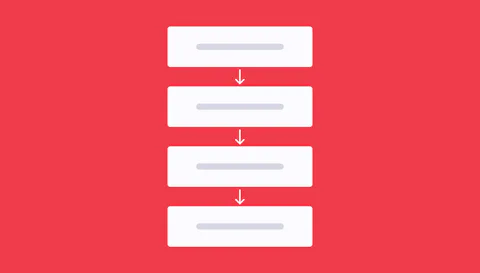
So how do we run the process? Below is a simplified overview of the key stages we go through to produce a new bespoke website for our clients.
Discovery
Before our web design team pushes a single pixel, we run rigorous, interactive and fun 🥳 Figjam discovery workshop. We dive into analytics and conduct thorough user and competitor analysis.
Strategy
After the discovery session, we create a complete sitemap, clickable prototypes to test functionality and user flows if applicable. We also map your existing URLs to the new structure to keep search engines happy.
Design
Next up, we turn your key pages into high-fidelity designs that express your brand and market position. Using proven UI principles and best practices, our web design team shapes the layout and visuals for maximum clarity and accessibility considerations, ensuring a seamless development hand-off via a comprehensive Figma design system.
Development
We build your website with a modern front-end framework called Tailwind CSS. This gives our clients rapid load times, strong security, and hassle-free upgrades. It’s a tailored development approach that avoids the bloat and technical debt of off-the-shelf templates.
Quality Assurance (QA) and User Acceptance Testing (UAT)
We carry out a rigorous QA and UAT phase that covers all key pages, devices, and browsers. This process resolves issues before launch and includes a step-by-step training guide for your team to ensure total confidence in the final product.
Launch and Aftercare
Our pre-live checklist and launch procedures ensure a stress-free transition. We then provide a 30-day hypercare window to keep improvements fast and responsive, ensuring the website continues to meet your business objectives, we'll then move you onto a retainer model to ensure we keep the development roadmap rolling.
Ben's tip: Ask how they handle revisions and how often you will talk. You want someone who provides clear communication and maybe even weekly videos. This ensures the final product actually matches your business goals and doesn't leave you in the dark.

The ROI of bespoke design
The invisible bleed of bad UX
Bad UX is a slow, quiet leak in your bank account. It isn't just about a slow site; it is the sheer annoyance of a button that hides or a menu that makes no sense. If your site feels like hard work, potential clients stop trusting you before they even read your pitch.
When a site is easy to use, it gives your business a massive edge. It proves you care about the person on the other side of the screen. This ensures your budget results in sales rather than just paying for people to get frustrated and leave. In fact, according to Toptal (The State of the User Experience) & Forrester Research The ROI of UX. for every £1 you invest in UX, you can see a return of up to £100.
How to Budget
Let’s address the elephant in the bank account. If you want a highly converting website, you have to stop thinking about "cost per page" and start thinking about "investment in outcomes." A cheap template is inexpensive because it requires zero thinking. You buy it, you change the colours, and you hope for the best.
A bespoke build takes hundreds of hours of research, development, and quality assurance. This is why minimum project size matters. If you want a tool that builds trust and drives sales, you cannot expect to pay "supermarket suit" prices. You are paying for a partner to de-risk your business and give you a competitive edge.
Ben's tips: If you have a fixed budget, tell the agency. A partner will be honest about what they can achieve within that limit or suggest a phased process to get you where you need to be without cutting corners on quality.

How to hire a web design agency
So how do you know you're getting a good partner? Choosing a web design agency shouldn't feel like playing roulette. You are entrusting your companies future to an external team. You need to know how to separate the strategic experts from the template installers before starting a new website.
🚩The Red Flags
Suspiciously low pricing for a "bespoke" build
Be wary of an agency that quotes a price that seems too good to be true. Often, they aren't conducting a bespoke development process; they are simply buying a pre-made theme and swapping the logo. This approach completely ignores your specific needs and leaves your site bloated with unnecessary code.
The "Yes Men" who never challenge your ideas
If a design agency agrees with every single one of your ideas without asking "why," run. A partner should have the knowledge to tell you when a feature will harm the user experience or tank your performance. If they don't challenge your assumptions, they aren't strategising; they're just order-taking.
Proprietary CMS "Prisons"
Avoid agencies that insist on using their own "in-house" content management system. This is often a trap to hold your business hostage. If you decide to leave the agency, you often can't take your website with you because the code is proprietary. Stick to open or widely supported platforms like Craft CMS.
Lack of retainer support or maintenance
A major warning sign is an agency that views the launch as the finish line. If they don't offer maintenance, retainers or updates, or infact any form of post launch support, they are essentially abandoning your project the moment it goes live. Websites requires support to remain secure and functional.
🟢 The Green Flags
A heavy focus on discovery and real data
Look for an agency that is obsessed with data. At Honcho, we are upfront about our minimum project size because doing bespoke UX and competitor analysis requires a significant investment of time and knowledge. They should want to dive into your analytics before they even start talking about design.
Dedicated strategic project lead and account manager
You don't want to play Chinese Whispers with a junior account manager, but you also don't want to be managing a developer's workflow. A high-quality agency provides a dedicated strategic lead and account manager. This person understands your business and translates your objectives into technical requirements, allowing the development team to focus on the build while clients have a single, knowledgeable point of contact.
Portfolios that highlight "How it works," not just "How it looks"
A stunning portfolio is easy to fake with high-res photography. A green-flag is that they show you how their digital experiences solved a problem for their clients. Look for case studies that discuss long term value, conversion rates, and performance metrics rather than just "pretty" screenshots.
Longevity and a strategic approach to growth
A mature agency views the launch as the beginning of a partnership. They should offer post launch monitoring and ongoing SEO strategies to ensure your digital presence keeps growing. Their approach should involve regular updates, normally through retainers to keep you ahead of the industry.
5 Questions to ask in your first meeting
To build a successful website, you need to know exactly who you are dealing with. Use these questions to test the expertise of any web design agency you interview.
Why did you choose your specific tech stack for my project? You want to hear a reason based on your business objectives, not their convenience. If they only use WordPress because "that is what we always do," they aren't a bespoke web design agency. A trusted partner picks tools that help your long term value.
If we stop working together, can I take my website with me? The answer must be a simple "Yes." You should own the code, the brand assets, and the final product. If the answer is "It is complicated," they are building a prison, not a site.
How do you know your design will actually work? A professional web design agency will talk about discovery, user data, and testing. If they say "we just know what looks good," they are guessing with your budget.
Who is actually doing the work on my site? Many agencies sell you the creative director but hand the development to a junior or a freelancer. Ask who your day-to-day contact is and who is writing the code. You want a dedicated team that knows your business.
What happens six months after the launch? A successful website needs a plan for the future. Ask about long term support, maintenance services, and how they handle regular updates. If they don't have a plan for post launch support, they aren't looking for a partnership.
Ben's Tips: Watch their body language. An expert will be happy to answer these. If they get defensive or use jargony words to confuse you, they are probably hiding a lack of experience.
The people factor: Who is actually doing the work?
Choosing a web design agency is about more than just a list of services. It is about the people. In this industry, there is a common trick: you meet the senior creative director during the pitch, but your project is handed to a junior who is still learning the ropes. This is a massive risk to your business.
High-level knowledge is what you are paying for. You need to know that the team you meet at the start is the same team that will be doing the heavy lifting. To build a successful website, the people writing the code and designing the pages need to understand your business deeply.
Don't be afraid to ask: "Who is actually pushing the pixels?" A partner will be proud to show off their team and their expertise. They won't hide behind a shiny presentation or a fancy office. They will be transparent about who is handling the development of your site. At Honcho, we believe that real relationships lead to better web projects and better results for our clients.
Ben's Tip: Check the agency's "About" page. If they don't show the faces of their team, ask why. You are hiring humans, not a faceless machine. You need to trust the people who are bringing your brand to life.

FAQs
Why does a bespoke website cost more than a template?
Because you are paying for a complete, research-backed commercial tool, a bespoke website requires a dedicated team of experts. We build a tailored architecture that supports your business.
How long does the web design process take?
Most bespoke web projects take 12+ weeks. However, depending upon the scope, it may take much longer.
Do you provide ongoing support?
Absolutely. A website is a living software application. We provide robust support packages. From post-launch support covering the initial 30 days to long-term care, our team is on hand. We offer post launch maintenance, retainers and monitoring to ensure peak visibility.
Can you just "refresh" our existing website?
Usually, no. When clients ask for a quick refresh, they are trying to fix a broken website with new typography. If the underlying content management system is a bloated mess, visual polish will not fix performance. We prefer to build a new website entirely tailored to your business goals, unless you are already on Craft CMS, in which case we do offer an onboarding service.
How involved does our internal team need to be?
We believe in working closely with our clients. We need your business expertise during discovery to define KPIs. We handle revisions in structured sprints, allowing you to run your company while we manage the development of your project, but trust us, whatever agency you use, you should be involved. It's our view that you know your business, and we know web design, so a match made in heaven!
Who owns the website once it is finished?
If you use us, you do. Once the invoice is paid, you own the code, the creative assets, the server, and the brand collateral we have produced to bring your ideas to life. We are not holding you hostage. While we hope you stay with us for support, you are entirely free to take your website wherever you choose.
Conclusion
At the end of the day, your website is either working for you or against you. It is either building trust or burning it.
I wrote this guide because, after 20 years in the industry, I’m tired of seeing good businesses get burned by bad code and "yes men" who just want a quick sale. You now have the roadmap to tell the difference between a "decorator" and a strategic partner. You know that a successful website isn't a happy accident; it is a highly engineered tool designed to solve your problems and drive sales.
Choosing a web design agency is a big move. It is the difference between buying a digital brochure that gathers dust and investing in a tool that gives you an unfair competitive edge.
If you are ready to stop guessing, sack assumptions, and build something that actually brings long-term value to your brand, we are ready to listen. We won't promise you the moon for fifty quid, but we will promise you a bespoke site that works exactly how it should.
Ready to sack assumptions?
Honcho is a premium, UK-based web design agency. We provide a complete service from initial discovery through to retained support. We don't just "make" websites. We build products that bring long-term value to our clients.

